
About
History
The National Institute of Minority Economic Development (NIMED) was founded in 1986 as the North Carolina Institute of Minority Economic Development with a grant from the Z. Smith Reynolds Foundation and N.C. Association of Minority Businesses to diversify North Carolina’s business base as a strategy for expanding economic opportunity.
Business, government, and community leaders recognized then that globalization, changing demographics, and technology were changing the game, replacing traditional industries and markets with new ones that required different skills and strategies for business success.

Engaging significant untapped segments of the population – diverse populations, women, people with disabilities, rural residents, and others – became a business and economic imperative. The Institute would lead the way.
Today, more than 40 years later, the Institute remains the only organization of its kind in the country focused on business and economic growth through effective business diversity. North Carolina’s model of collaboration and its exceptional ecosystem are recognized as a model by other states and regions.
The Institute continues to work with small businesses, large multinational corporations, local governments and state leaders to open doors of opportunity and create an environment where businesses of all kinds grow and thrive.
In Remembrance of the Legacy of Ms. Andrea Harris, Co-Founder of the Institute
What Sets Us Apart
Focus on Diversity
The Institute — the only organization of its kind in the country — offers over 39 years of experience helping clients harness the power of diversity to achieve business and economic objectives.
Business Knowledge and Expertise
We bring deep industry knowledge of how to help businesses of all kinds start and grow; business owners turn barriers of race, gender and disability into opportunity; companies diversify their supply chains; and communities broaden their business base.
Proven Methods
We help clients develop the three core elements — money, markets and management — required for business success. Uniquely, we integrate critical diversity management strategies every step of the way, helping clients connect with broader pools of high-quality vendors and suppliers, and successfully enter new high-potential markets.
Broad Networks
Our extensive network of investors, partners and clients developed over three decades connects clients with business assistance and opportunity for achieving their business objectives.
Passion and Commitment
As a nonprofit, our bottom line is helping clients become more successful and America become more prosperous by getting business diversity right.
Opportunity
The Institute will seize every opportunity to be of service to those of us in the greatest need, such as diverse groups, under-represented and under-served populations, low to moderate income communities and individuals. We consider it a privilege to be of service.
Contact the Institute to learn more or get help growing your business and diversifying the marketplace.
Our Parrish Street Building
The Institute’s headquarters in downtown Durham, N.C. anchors the heart of what was once known as “Black Wall Street,” home to some of the nation’s largest and most diversely-owned financial and related institutions.
Placed on the National Register of Historic Places in 1974 and later designated a National Historic Landmark, the building remains one of only a handful of landmarks owned by a diverse organization.
The North Carolina Mutual Life Insurance Company built the neoclassical, revival-style structure at 116 West Parrish Street in the center of Durham’s business district as the company’s second home. The building was officially dedicated on Saturday, December 17, 1921 after its completion in October of that year. In 1922, Mechanics and Farmers Bank moved its headquarters to the first floor.
The Institute purchased the building in 1999 and in 2008 restored the building’s facade – windows, frames, and balconies – with a $100,000 grant from the U.S. Department of Housing and Urban Development and a $500,000 appropriation from the North Carolina General Assembly. A capital campaign is under way to continue renovations to restore the exterior entryway to its original condition and to upgrade interior spaces and infrastructure.
Today, the Institute shares this historic space and Parrish Street attraction with an M&F Bank branch, the first floor anchor tenant, and several other businesses.

Leadership
The Institute’s leadership team of nationally recognized experts brings deep knowledge, broad networks and strong commitment to the work of creating companies that are stronger and more profitable because of their diversity.
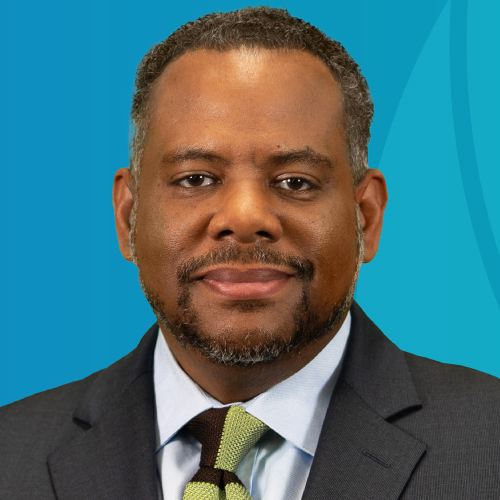
Kevin J. Price, MBA
Kevin J. Price
President & CEO
Kevin is the third president and chief executive officer of the National Institute of Minority Economic Development in Durham, NC. The Institute, a 37-year-old nonprofit management consulting and services firm, is focused on business diversity and inclusion. They are trusted advisors to businesses large and small, government agencies, policy makers and organizations that understand the key roles diversity and inclusion play in ensuring business and economic success. Their client services include customized one-on-one assistance, training, knowledge, networks and solutions that create diverse, globally competitive companies. The Institute is an award-winning organization and leading voice and constant advocate for public policies and business practices that promote marketplace diversity and inclusion. In June 2020, The Institute successfully merged with the North Carolina Community Development Initiative and rebranded it as Institute Capital (ICAP). ICAP is a community development financial institution, providing vital financing to diverse businesses, community development corporations and HBCUs throughout the state. Both organizations are headquartered in Durham, NC on Parrish Street, which was once known as the “Black Wall Street” of the south. Price’s career has been steeped in community economic development for over 30 years. He joined The Institute as a veteran business leader in healthcare, supplier diversity, faith-based affordable housing, community development and commercial banking. Immediately prior to joining The Institute March 9, 2020, Price was Senior Director of Supplier Diversity & Performance Analytics at Novant Health for 14 years. While there, he launched their supplier diversity activities, growing spend by more than 500% utilizing over 550 diverse suppliers resulting in over $1 billion in spend since its launch in 2006, automated Tier I and II reporting, encouraged numerous majority/diverse joint ventures, collaborated with the Tuck School of Business at Dartmouth to add a healthcare component to their Minority Executive Training program for six consecutive years and launched a $5 million loan guarantee program for diverse suppliers, in partnership with M&F Bank. Price also served as a master diversity and inclusion facilitator/trainer for the company.
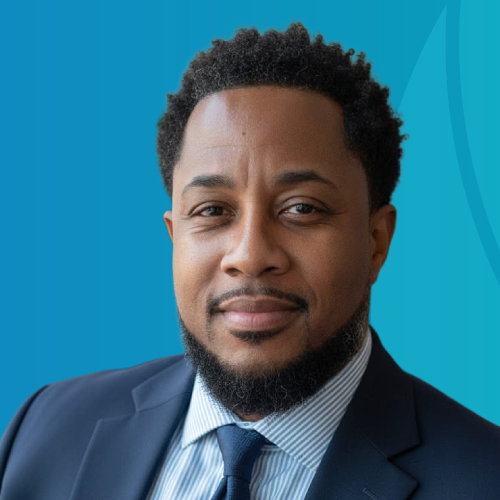
Hanif Omar, MBA
Hanif Omar, MBA
Chief Financial Officer
Hanif Omar serves as the Chief Financial Officer for the National Institute of Minority Economic Development (NIMED), bringing over 25 years of expertise in commercial underwriting, credit risk management, and community economic development. A seasoned financial executive, historian, professor, and entrepreneur, Mr. Omar has dedicated his career to leading complex organizations, building strategic alliances, and expanding access to capital for historically underserved businesses.
Prior to joining NIMED, Mr. Omar held key leadership roles within the CDFI and mission-driven finance ecosystem. He previously served as a Senior Investment Analyst with Mission Driven Finance and Director of Commercial Lending for Piedmont Business Capital. His extensive background in public and private finance is rooted in his early tenure as an Assistant State Auditor for North Carolina, which laid the foundation for his rigorous approach to financial compliance, complex grant accounting, and large-scale capital program management.
In addition to his executive leadership, Mr. Omar manages The Omar Group, LLC, a business and finance consulting firm operating in North Carolina, Virginia, and Washington, D.C., and serves as the managing partner of Co-Mar NIL Advisors, a full-service sports agency. A passionate educator and advocate for capacity building, he is a former Professor of Entrepreneurship at Shaw University’s School of Business and Professional Studies, having previously directed the university’s Innovation & Entrepreneurship Center.
Mr. Omar is a three-time graduate of North Carolina Central University, holding a Master of Business Administration (MBA), a Bachelor of Science in Accounting, and a Bachelor of Arts in History.
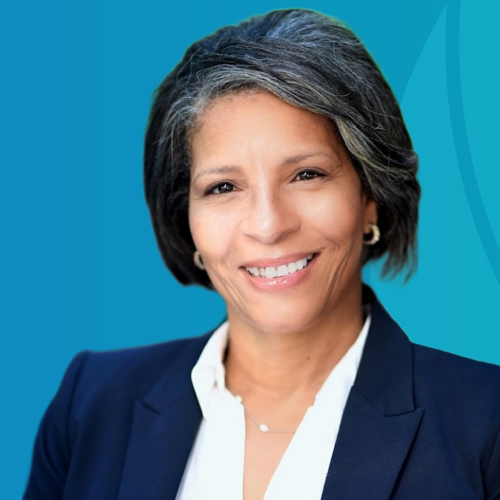
Vicki Lee Parker-High, MBA
Chief Operations Officer
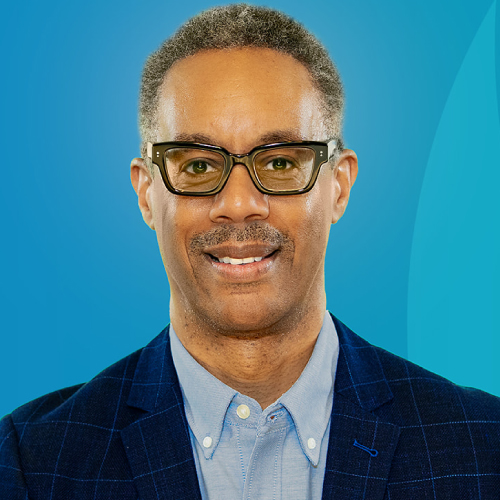
John F. Ham
Vice President
CEPE
Board of Directors
Nikitra Bailey
Nikitra Bailey
Executive Vice President National Fair Housing Alliance Washington, DC
Nikitra Bailey is an executive vice president at the Center for Responsible Lending (CRL), the policy affiliate of Self-Help, the nation’s largest community development lender. Ms. Bailey plays an integral role in developing and driving the strategic direction of the organization’s consumer protection and fair lending agenda as a member of the executive team. She advances national and state public policy reforms that provide access to safe and responsible credit on affordable terms for families and communities traditionally underserved by the banking system. She leads mortgage advocacy and is the principal strategist for coalition partnerships that span civil rights, faith, women, labor, and community advocates across the nation. In addition, she oversees CRL’s resource development efforts. Ms. Bailey is the author of numerous reports and articles on predatory lending’s impact on people of color and women and a frequent media contributor to the New York Times, American Banker, Washington Post, and the National Newspaper Publishers Association outlets. She has also served as an expert witness to the House Financial Services Committee on housing finance reform and mortgage lending discrimination. Currently, Ms. Bailey serves on the Consumer Financial Protection Bureau Consumer Advisory Board, as vice-chair of the NC Housing Coalition, and as a board member of the NC Institute for Minority Economic Development. She is a member of the Insight Center’s Closing the Racial Wealth Gap Initiative Experts of Color Network. Ms. Bailey holds a J.D. from the University of Pittsburgh School of Law, and a B.A. from the Pennsylvania State University.
Tyrone R. Baines, PhD
Tyrone R. Baines, PhD
Supplier Diversity Consultant (Retired) American Honda Motor Company Durham, NC
Dr. Tyrone Baines chairs the Personnel & Governance Committee. He has a history of service in higher education as he established the Public Administration Program at North Carolina Central University and served as Executive Assistant to the Chancellor. Dr. Baines has served in numerous leadership positions in professional academic organizations, and helped to guide and grow a national organization of public administrators. He left higher education to serve as a program officer with the Kellogg Foundation from which he has now retired. Dr. Baines has continued service as a consultant to a major automobile manufacturer with a focus on building and expanding supplier diversity initiatives and result from the company.
Martin Eakes
Martin Eakes
Chief Executive Officer Self-Help / Center for Responsible Lending Durham, NC
Mr. Martin Eakes is Founder and President of the Center for Community Self-Help. Self-Help is the largest development bank in the country with assets of over $1 billion. Self-Help provides loans to support neighborhood development, commercial development in low-wealth communities, and home ownership. Self-Help is a national leader in affordable housing and is a model for community development credit unions. In partnership with several large traditional lenders/banks, Self-Help has established a secondary mortgage program that positions banks to more than double lending for low-moderate income home mortgages. Self-Help created and has led the most accomplished development bank in the nation, Self-Help Credit Union. It has also helped to established Generations Credit Union, a base of older community based credit unions, along with the largest and fastest growing credit union in the nation, the Latino Credit Union. Mr. Eakes established the Center for Responsible Lending, and is a leader in addressing issues of predatory lending and mortgage foreclosure.
Ted Edwards
Ted Edwards
Principal The Banks Law Firm Durham, NC
Mr. Edwards graduated from Duke University with a double major in Political Science and Sociology. He also received his Juris Doctor degree from the Duke University School of Law. Mr. Edwards focuses his practice on commercial litigation and is a certified mediator. In 2006, Mr. Edwards was awarded the William L. Thorpe Pro Bono Attorney Award by the North Carolina Bar Association, which recognizes attorneys who provide exceptional pro bono legal assistance to low-income citizens in North Carolina. In 2011, he was selected for the North Carolina Bar Association’s Citizen Lawyer Award which honors attorney for exemplary public service activities. In 2012, Mr. Edwards served as President of the Wake County Bar Association. Mr. Edwards is currently serving as a member of the North Carolina State Bar Council.
Michael Hamuka
Michael Hamuka
Chief Executive Officer for WorkSmart Durham, NC
Adam Klein
Adam Klein
Associate Vice President for Economic Development Duke University Durham, NC
Adam Klein is Director of Strategy for Capitol Broadcasting Company–a diversified communications company which owns and operates businesses in television, radio, commercial real estate, technology entrepreneurship, and residential building supplies. He is based in Durham, N.C. — a city that is capturing the national imagination with its Silicon Valley vibe and location just minutes from the world-famous Research Triangle Park. Prior to his role as Director of Strategy, Klein led The American Underground, a campus for entrepreneurs started by Capitol Broadcasting. Under Klein’s leadership, Google for Entrepreneurs designated The American Underground as one of only eight sites in the country to be part of its Tech Hub network. And at a time when cities are struggling to reinvent themselves, The American Underground has become a national model for how to transform a once-depressed downtown into a magnet for high-growth companies. Prior to The American Underground, Klein was Director of Strategic Initiatives for the Greater Durham Chamber of Commerce. He led the Chamber’s entrepreneurship efforts, working to accelerate Durham’s position as the hub for entrepreneurship in the Southeast. Klein co-founded two initiatives, the Bull City Startup Stampede and The Smoffice, which brought nearly 40 startups to downtown Durham and earned national media attention as well as “The Most Unconventional Economic Development Project in the World” award from the World Chambers Congress in Doha, Qatar. Both initiatives were launched for less than $20,000 total. Adam Klein is originally from Brecksville, Ohio and received his undergraduate degree from Denison University where he was a two-time Academic All-American in golf. He holds a Master of Regional Planning with a specialization in economic development from the University of North Carolina at Chapel Hill. He and his wife, Manda, live in Durham with their three daughters.
Suzanne Malone
Suzanne Malone
Chief Executive Officer Strategies for Small Business
Ms. Sue Malone is the number one provider, SBA Export Express and SBA SLA v.2 and director of marketing for Superior Financial Group. Ms. Malone’s involvement began with the program’s inception in 2002. Since then, she has helped fund over 41,000 SBA loans including Patriot Express loans, Export Express, Community Express and now Small Lender Advantage v.2, and became the largest SBA lender by volume. Her goal is to fund 100,000 small businesses.
Ms. Malone travels the nation meeting, promoting and funding small business owners especially minority, women and veteran owned businesses. She is fueled by her passion to help small business owners pursue their dreams. Ms. Malone has received numerous awards for her contribution to the success of small businesses around the nation. She has been the number one lender to minority owned business by volume under SBA.
Ms. Malone sits on several national boards focused on veterans and entrepreneurship including the President of the nonprofit American Economic Empowerment and co-founder of Women’s Military Exchange: Operation Next Step. In addition, she is one of the founders of VetPower.org and Vet-Power.org., both focusing on giving veterans an opportunity for entrepreneurship and job seeking. In addition, she has authored several of the government loan programs which are used across the nation along with private equity and private investment programs for America’s small businesses.
Ms. Malone is the President and CEO of the on-line company www.nationallienlaw.com which helps contractors across the nation with easy and cost efficient lien forms.
Lewis H. Myers
Lewis H. Myers
Principal and Director, Market Development (Retired) Perkins+Will Durham, NC
Mr. Lew Myers is Director of Marketing for the Freelon Group. The Freelon Group is recognized as one of the most up and coming firms in America. In 2008, the Freelon Group was recognized by Contract Magazine as The Designer of the Year. The firm is also the recipient of the AIA North Carolina Outstanding Firm Award in recognition of outstanding service and design excellence. They have received awards for work around the country. Prior to joining the Freelon Group, Mr. Myers had his own successful consulting firm, and had served as a vice-president for a construction management firm. Mr. Myers also worked as Assistant Secretary for Small Business, NC Department of Commerce. He is also a founding NCIMED board member and chairs its fundraising committee.
Patricia Russell-McCloud
Patricia Russell-McCloud
Professional Lecturer & Public Speaker
Russell-McCloud is a “visual speaking experience.” With more than 30 years on the lecture circuit, she is categorized as being one of the nation’s best. Her speaking style is engaging, highly substantive, well researched, pertinent to her audiences, and entertaining, whether for the public or private sector. She is distinguished and distinct Her style is classified as “big, broad and animated”, which leaves her audiences anxious for more. With each presentation, she demonstrates, yet again, that she is a master at her craft as she artfully seeks to master the spoken word. In sum, this is a ‘speaker’s speaker’ who specializes in ascertaining the organization’s culture, interests and challenges. The client, in turn, receives the value of the experience and exposure to this qualitatively measurable speaker who is, in a word, unforgettable.
Angelique Stallings
Angelique Stallings
Vice President, Greater Durham Chamber of Commerce, Durham, NC
Angelique Stallings is Durham’s biggest cheerleader and brings light into every room she enters! Angelique serves as the Vice President of the Greater Durham Chamber of Commerce, and she is an experienced community and corporate leader who has served the Durham community for more than 20 years.
A graduate of North Carolina Central University, Angelique has strived to be a conduit between underrepresented communities and local businesses. She volunteers with many organizations and is a tireless advocate and ally for women and equal and equitable rights. She also serves on several boards throughout the community.
Angelique is an active member of the Durham Alumnae Chapter of Delta Sigma Theta Sorority, Inc, and she is the proud mom of Dajah, a UNC and Georgetown graduate who currently works for the Seattle Seahawks. In her spare time, Angelique loves to read, to travel, and to spend time with friends and family.
Michael Suggs
Michael Suggs
President Goler Community Development Corporation Winston-Salem, NC
Mr. Suggs is chairman of the Board of Directors for the Goler Community Development Corporation. Under his leadership, Goler CDC has recently undertaken a $100 million redevelopment of the Goler neighborhood just east of downtown to assure inclusion and opportunity. He is the former Senior Director of Public Affairs for R.J.Reynolds. The Goler CDC is a faith based community development corporation that is an outgrowth of the Goler AME Zion Church in Winston-Salem. Mr. Suggs has worked closely with numerous national organizations for women and minorities, and represents the interest of the Institute with national and statewide organizations. He and his wife own and operate a small retail arts and bookstore. Mr. Suggs chairs the Institute’s audit committee.
Sustaining Partners






Press & Publications
A Letter from the Institute President – “2026 A Way Forward”
Dear Valued Stakeholders,
This July, the National Institute of Minority Economic Development will mark its 40th anniversary milestone, which stands as a testament to our steadfast dedication to advancing economic equity and opportunity across North Carolina, the region, and the nation. From the beginning, our founders, Andrea Harris and Lew Myers, held the conviction that there must be a statewide institution committed to strengthening the economic foundation of diverse communities. That conviction became our mission, and it has guided our every step. Because of that mission and your partnership, the Institute has delivered meaningful, measurable impact. Since 2004, we have:
- Deployed $35 million in direct loans through Institute Capital, our CDFI
- Distributed more than $33 million in grants to small businesses
- Helped small businesses secure over $482 million in bonding for public and private projects
- Assisted businesses in obtaining $1.7 billion in public and private contracts
- Technical assistance and support to 18,000 small businesses and 20,000 entrepreneurs
- Supported the creation or retention of nearly 10,000 jobs
Despite this strong legacy, today’s environment presents challenges unlike any we have ever faced. Over the past 18 months, the Institute has faced delayed payments, rescinded awards, and intentional defunding—resulting in millions of dollars in lost revenue. These setbacks, coupled with repeated government shutdowns and ongoing funding delays, have made it impossible to sustain our current structure. Thus, we have had to make painful decisions, including staffing reductions and program cuts. With deep regret, we must also cancel the Executive Networking Conference (ENC2026) and several small business programs. However, we are moving forward with ENC2027. We want to assure you that the Institute remains resilient and is looking forward to a promising future. Institute Community Development Initiative (ICDI) and Institute Capital (ICAP) will continue normal operations while we take a hard, honest look at our business model and chart a new path forward. Thank you for your patience, your contributions, and your unwavering support.
With appreciation and resolve,
Kevin J. Price
President & CEO
CONTACT
Kevin J. Price, President & CEO
919-956-8889
info@theinstitutenc.org
NATIONAL INSTITUTE OF MINORITY ECONOMIC DEVELOPMENT CELEBRATES NEW CHARLOTTE HUB
WITH OPEN HOUSE AND RIBBON CUTTING CEREMONY
[Charlotte, NC April 23, 2025] The National Institute of Minority Economic Development (NIMED) proudly celebrated the grand opening of its new Charlotte headquarters at 916 W. 5th Street on Thursday, April 17, 2025, with a vibrant ribbon cutting and open house ceremony attended by civic leaders, business owners, and community partners.
This state-of-the-art facility will serve as a regional powerhouse for economic empowerment, housing NIMED’s key affiliate, Institute Capital, a mission-driven Community Development Financial Institution (CDFI); the Women’s Business Center of Charlotte, providing training and support to diverse entrepreneurs; and the Center for Strategic Partnerships, identifying opportunities and developing collaborations to accelerate small business growth.
“This building is more than brick and mortar — it is a hub for opportunity,” said Kevin J. Price, President and CEO of NIMED. “It’s where small and diverse businesses will find the tools, capital, and support needed to thrive — and where Community Development Corporations (CDCs) across our region will be trained, mentored, and empowered to continue their vital work.”
During his remarks, Price highlighted NIMED’s explosive growth over the past five years — expanding into seven states and tripling in size — and its unwavering commitment to building wealth in communities of color through business ownership, homeownership, and leadership development. He also underscored the building’s legacy, noting that it was originally constructed in the 1970s by African American attorney Edmond Johnson, who used it to incubate minority businesses — a mission that now comes full circle.
The open house also marked the formal signing of a Memorandum of Understanding (MOU) between NIMED and the Urban League of Central Carolinas, represented by President & CEO Robyn Lake Hamilton. The partnership will strategically align small business development with workforce readiness, ensuring that the region’s growing pool of skilled workers can meet the needs of minority-owned firms scaling up with new capital.
Among the dignitaries present were Charlotte City Councilman At Large James Mitchell, Mecklenburg County Commissioner Lee Altman, and Rev. Dr. Clifford A. Jones, Sr., who offered a powerful dedication of the new space as a “ministry for the people,” emphasizing compassion, service, and perseverance.
In a nod to history and legacy, the building’s interior pays tribute to influential minority business pioneers from Charlotte, including Floyd Young, Jim Richardson, and others whose leadership paved the way for today’s entrepreneurs.
With 75% of the renovation work completed by minority-owned firms, the project embodies NIMED’s core value of “walking the walk.”
“We’re not just talking about equity — we’re investing in it, building it, and proving that it works,” Price affirmed. “This hub will be the nucleus of transformation for small businesses and community development organizations across Charlotte and beyond.”
##
ABOUT THE INSTITUTE
National Institute of Minority Economic Development (NIMED) – Headquartered in Durham, North Carolina, NIMED was founded in 1986 by noted economic development advocate Dr. Andrea L. Harris and fueled by grants from the Z. Smith Reynolds Foundation and N.C. Association of Minority Businesses. NIMED’s mission is to strengthen the asset base of diverse populations through policy, education, and economic opportunities. We provide technical assistance, capacity building, capital, and corporate connections to over 6,000 diverse businesses, government organizations, HBCUs, and nonprofit organizations, allowing them to grow, thrive, create jobs, and become sustainable and valued partners within their local communities. Our vision is economic prosperity for diverse populations and contributing to an environment where race, gender, and geography are no longer barriers to economic opportunity and prosperity. Our core values are trust, excellence, innovation, and collaboration, and everyone should have equal opportunities to participate in and contribute to our economy and civic life. More about our work can be found at www.theinstitutenc.org.
CONTACT
Kevin J. Price, President & CEO
919-956-8889
info@theinstitutenc.org
TANZANIA ECONOMIC DEVELOPMENT SUMMIT, A MAJOR AFRICAN HUB, YIELDS DEALS
[Durham, NC March 24, 2025] The National Institute of Minority Economic Development (NIMED) in collaboration with the Embassy of the United Republic of Tanzania in Washington D.C, Sister Cities International (SCI), Tanzania Trade Development Authority (TanTrade), U.S. Commercial Service, and American Chamber of Commerce -Tanzania (AmCham TZ) convened the Tanzania Economic Development Summit in Dar es Salaam, Tanzania from March 10-14, 2025. Tanzania rolled out the red carpet and convened multiple workshops that brought together government leaders such as Hon. Amb. Mahmoud Thabit Kombo (MP), Minister of Foreign Affairs and EA Cooperation, Hon. Shariff Ali. Shariff, Minister of State, President’s Office, Labour, Economic Affairs, and Investment – Zanzibar, Hon. Exaud Kigahe (MP), Deputy Minister of Industry and Trade, H.E. Andrew Lentz, U.S. Chargé d’Affaires to Tanzania, H.E. Dr. Elsie S. Kanza, Ambassador of the United Republic of Tanzania to the U.S. and Mexico to explore business opportunities and deepen the U.S. – Tanzania commercial ties.
Over twelve U.S. companies and institutions participated in the Summit and sought complementary partners in Tanzania and focused on target industries including academia, agriculture, manufacturing, other professional services, real estate development and technology. Also, more than 30 Tanzania companies and institutions participated in the Summit. Key takeaways of the Summit are highlighted below.
NIMED President Kevin J. Price said, “The reason we’re here is to do business; to provide support systems and resources for diverse U.S. business owners looking for opportunities beyond those in the U.S. This amazing summit is the culmination of over 2 years of planning, but this is just the beginning of great things to come as we prepare even more opportunities for diverse business owners to grow abroad and make connections to do international business.”
In his remarks, Hon. Amb. Mahmoud Thabit Kombo (MP), Minister of Foreign Affairs and East African Cooperation said, “Today we are united by a common vision to foster strong business ties between us, promote investment opportunities, and accelerate trade expansion between our two nations.” This reaffirms Tanzania’s enduring commitment to fostering strategic partnerships and attracting foreign investors.
Her Excellency Dr. Elsie Sia Kanza, Ambassador of the United Republic of Tanzania to the U.S. and Mexico encouraged businesses to take advantage of available trade and investment facilitation instruments such as AGOA, Memorandum of Understanding for Commercial Dialogue, Tanzania’s Investment Incentive Agreement with U.S DFC and a US$500 million credit facility with U.S Exim Bank to facilitate access to finance by companies interested in doing business with Tanzania.
Tanzania has one of the largest, most diversified, and fastest-growing economies in Africa with an annual rate of 5.4% to 5.5% in 2024, up from 5.1% in 2023. The growth is driven by key sectors such as agriculture, manufacturing, mining, and tourism, along with government policies aimed at improving the business environment and attracting foreign investment. Tanzania serves as a food basket for Eastern, Central, and Southern African regions, leading producer of pulses in Africa, ranking second largest producer of maize and honey in Africa, fourth and eighth largest producer of sweet potatoes and cashew nuts in the world respectively. Tanzania is a source of abundant mineral resources, including being the sole producer of Tanzanite gemstone in the world and one of top five gold producers in Africa. In terms of critical minerals deposits, Tanzania is ranked 3rd in Africa and 6th worldwide. Tanzania holds East Africa’s highest credit rating with B1 by Moody’s and B+ by Fitch, reflecting stability and investor confidence. Real estate development has seen increased activity, with 91 investment projects registered under Tanzania Investment Centre in 2024. This accounts for about 10.1% of all investments, fueled by urban expansion, infrastructure projects, and demand for affordable housing. Tanzania has one of the most integrated mobile payment systems in the world.
The U.S. delegation embarked on key industry visits to a select group of Tanzanian companies and institutions including Africab Group, CV People Tanzania, Kamal Steel, Kazi Yetu, Satcom Network Africa Limited and the University of Dar es Salaam to gain exclusive insights on their operations and to create excellent pathway for collaboration.
A trip to the idyllic island of Zanzibar, the Spice Island, bookended the trip, where the U.S. delegation explored real estate opportunities and tourist delights. The delegation paid homage to Zanzibar’s history with a visit to the Slave Market Memorial in Stone Town.
Zanzibar is experiencing an uptick in luxury property and hotel development. There has been a particular boom among African Americans visiting and purchasing property on the island.
NIMED signed a partnership agreement with TanTrade, which offers ongoing support and marks the beginning of a long-term relationship. NIMED also expects to finalize investment partnerships in the coming months. Trade missions and visits are being organized in follow-up to encourage African Americans and minority business owners to establish lucrative partnerships in Tanzania, a thriving and stable African economic partner.
##
ABOUT THE INSTITUTE
National Institute of Minority Economic Development (NIMED) – Headquartered in Durham, North Carolina, NIMED was founded in 1986 by noted economic development advocate Dr. Andrea L. Harris and fueled by grants from the Z. Smith Reynolds Foundation and N.C. Association of Minority Businesses. NIMED’s mission is to strengthen the asset base of diverse populations through policy, education, and economic opportunities. We provide technical assistance, capacity building, capital, and corporate connections to over 6,000 diverse businesses, government organizations, HBCUs, and nonprofit organizations, allowing them to grow, thrive, create jobs, and become sustainable and valued partners within their local communities. Our vision is economic prosperity for diverse populations and contributing to an environment where race, gender, and geography are no longer barriers to economic opportunity and prosperity. Our core values are trust, excellence, innovation, and collaboration, and everyone should have equal opportunities to participate in and contribute to our economy and civic life. More about our work can be found at www.theinstitutenc.org.
CONTACT
Lea Henry, Vice President, Institute Community Development Initiative
919-824-3803
lhenry@theinstitutenc.org
THE INSTITUTE LAUNCHES INSTITUTE COMMUNITY DEVELOPMENT INITIATIVE (ICDI): A NEW AFFILIATED NONPROFIT ENTITY
[Durham, NC October 30, 2024] The National Institute of Minority Economic Development (the Institute) announces a third nonprofit entity under our umbrella of work to support diverse populations: Institute Community Development Initiative (ICDI).
Originally founded in 1986, the Institute leverages nearly 40 years of experience serving diverse communities through our steadfast mission: to strengthen the asset base of diverse populations through policy, education, and economic opportunities. In 2020, the North Carolina Institute of Minority Economic Development merged with the North Carolina Community Development Initiative and its respected affiliated CDFI, Initiative Capital, to form the National Institute of Minority Economic Development. Rebranded as Institute Capital (ICAP), the affiliate CDFI added a critical component to the Institute’s economic justice work. However, the Institute recognized that our suite of offerings was not complete without a dedicated entity to support and promote community economic development. With seed funding from the North Carolina General Assembly, ICDI was incorporated in 2023 and received its 501 (c) (3) status in 2024. With this third affiliate, the Institute leverages a combined sixty years of competency and trust for diverse businesses and neighborhoods – particularly filling a gap in the critical funding needed to provide affordable attainable housing throughout our footprint.
Institute Community Development Initiative’s (ICDI) provides capacity-building and financial resources to community development corporations (CDCs) across North Carolina. ICDI serves as an intermediary, pooling investments from private equity, foundations, financial institutions, and federal and state funding, to support smaller CDCs and broader community partnerships. With the Institute’s solid reputation and proven track record, ICDI provides a supportive ecosystem for other CDCs to thrive. In communities without an existing CDC, ICDI can facilitate the development of affordable housing and/or community economic development services through any combination of the above supports. ICDI will also partner with our CDFI affiliate, Institute Capital (ICAP) to develop mixed use projects on ICAP’s property in Winston-Salem and Rocky Mount.
ICDI will open a grant application for operating grants for CDCs in late October. These operating grants will be available to CDCs and affordable housing nonprofits in North Carolina. These grants represent the first state-funded operating grants for CDCs in more than a decade and demonstrate the revived support of the NC General Assembly for community-based organizations bridging the housing gap in our state.
NEW ICDI LEADERS INCLUDE:
Lea Henry: Henry joined the Institute in 2022 with more than thirty years’ experience as a leader of social and economic change efforts in North Carolina. With a master’s in public policy from the John F. Kennedy School of Government at Harvard University and a BA from Columbia, Henry has extensive experience leading community development and affordable housing initiatives in public and private sectors “I take great pride in the opportunities I have had to play a role in important economic recovery issues – from hurricanes in eastern NC, the economic shocks from the Great Recession, and supporting communities struggling to return after the pandemic.” Henry continues, adding, “I am looking forward to increasing and amplifying the critical roles that CDCs and other community economic development nonprofits play in bringing resources to local communities and helping families and businesses prosper.”
Shoneca Kent: Kent brings fifteen years in experience working in rural community development, primarily in eastern North Carolina. Utilizing research training as a Sociologist (UNC-Chapel Hill) and skillsets developed as a coach and facilitator, Kent is excited to continue to enact community-centered work that will have a direct, positive impact on distressed communities, while also scaling and leveraging past projects across other regions in western NC and our entire six-state geography.
##
ABOUT THE INSTITUTE
The NC Institute of Minority Economic Development was founded in 1986 to expand and diversify the state’s economic base by providing direct support to minority and women-owned businesses. Now known as the National Institute of Minority Economic Development and spanning a five-state footprint in the Southeast, the Institute continues to address racial and gender economic disparities by improving the ecosystem for diverse small businesses and increasing access to capital for business and communities. The Institute has helped more than 10,000 minority businesses obtain over $1 billion in financial contracts and awards and secure more than $140 million in bonding. More can be found at www.theinstitutenc.org.
FOR IMMEDIATE RELEASE
January 23, 2024
CONTACT
Jenny Shields – Jenny.Shields@self-help.org | O: 919.794.6798
T.F. Congleton: tcongleton@theinstitutenc.org | O: 252.916.5211
Martin Acevedo: macevedo@cfgg.org | C: 210.317.2345
Cynthia Blue: cynthia.blue@greensboro-nc.gov | O: 336.433.7376
GREENSBORO HOUSING LOAN FUND LAUNCHES $21 MILLION LENDING PROGRAM
TO PRESERVE, BUILD ATTAINABLE HOUSING
Greensboro, NC – The Greensboro Housing Loan Fund, a public-private partnership for attainable housing, is officially in business. The targeted $32.5 million loan program, for which $21 million has been raised to date, is aimed at for-profit and nonprofit developers of local, multifamily structures. The program’s goal is to increase the inventory of attainable housing in Greensboro through new development and repair and rehabilitation of existing housing.
“With the recent huge economic development victories with companies like Toyota and Boom, we must expand with urgency our city’s housing inventory to meet the needs of today’s citizens and tomorrow’s workforce,” says Walker Sanders, President of the Community Foundation of Greater Greensboro. “We’re calling on housing developers, big and small, local and outside the region, to tap into this loan fund for substantial projects that grow their bottom line and address our housing crisis.”
To qualify, borrowers must have recent, relevant attainable housing development experience, and their planned development must be located within Greensboro’s city limits. Loan funds may be used for acquisition or refinance and, if needed, rehabilitation of existing attainable housing. This is not a home loan or rental subsidy program.
The current $21 million in the Greensboro Housing Loan Fund will be administered by two Community Development Financial Institutions (CDFIs) with two different loan programs whose lending activities will differ in scale:
- $8 Million: Institute Capital (ICAP), an affiliate of the National Institute of Minority Economic Development, will offer loans to borrowers who cannot typically get capital from mainstream financial institutions, and who are working to create thriving economies in diverse Greensboro communities. These loans are targeted to attainable housing developers, community-based development organizations, and small businesses.
Contact: T.F. Congleton, tcongleton@theinstitutenc.org, 252.916.5211, Institute Capital (ICAP) - $13 Million: Self-Help Ventures Fund, part of Self-Help’s family of nonprofit organizations, will offer loans to borrowers who, having secured market rate senior debt financing, require supportive gap financing for both preservation of existing attainable housing and construction of new attainable housing. These loans are targeted to sole proprietors, partnerships, LLCs, corporations, and nonprofit or for-profit entities.
Contact: JJ Froehlich, john.froehlich@self-help.org, 919.794.6792, Self-Help Ventures Fund & Credit Union
The creation of a housing loan fund was recommended in the City of Greensboro ’s 10-year Housing Plan in 2020, and the Community Foundation of Greater Greensboro has partnered with the City to make the plan a reality. Greensboro City Council committed $5 million from the 2022 housing bond funds to the ICAP portion of the program. Both the City and the Community Foundation have partnered with several regional banks and corporations to support the fund, and the Community Foundation continues to secure support through private philanthropy. If you are interested in investing in the fund, please contact Walker Sanders at wsanders@cfgg.org.
###
Institute Capital (ICAP) is an affiliate of the National Institute of Minority Economic Development which provides debt and investment capital to attainable housing developers, community-based development organizations and small businesses. Our goal is to revitalize and transform diverse communities through attainable housing, entrepreneurship, HBCU collaborations and community development. For more information, please visit https://theinstitutenc.org/icap/
Self-Help Credit Union was chartered in 1983 to build a network of credit union branches to operate on a scale uncommon in the community development industry. We are part of the Self-Help family of nonprofit organizations with a common mission of homeownership and economic opportunity for all. Over its 40-year history, Self-Help has learned that access to responsible savings, loans, and other fair, affordable products are key to financial security and improved opportunity for families who have often faced systemic barriers to building wealth and achieving economic inclusion. For more information, visit https://self-help.org
Self-Help Ventures Fund is a nonprofit 501(c)(3) loan fund capitalized with loans and grants from foundations, religious organizations, corporations, and government sources. It manages Self-Help’s higher-risk business loans, real estate development and home loan secondary market programs. For more information, visit https://www.self-help.org/who-we-are/self-help-family/self-help-ventures-fund
The Community Foundation of Greater Greensboro is a charitable organization that inspires giving, maximizes opportunities and strengthens communities for present and future generations. With assets of approximately $300 million and approximately 700 charitable funds under management, it promotes philanthropy by addressing emerging community issues, managing permanent endowments, and collaborating with individuals, families, corporations, private foundations, and nonprofit organizations in achieving their charitable objectives. In 2022, it received $13.6 million in contributions and granted $14.9 million. For more information, visit https://cfgg.org/
Housing and Neighborhood Development, City of Greensboro
https://www.greensboro-nc.gov/departments/housing-neighborhood-development/housing-services/housing-gso